The Role of Beats in Modern Music: A Producer's Guide
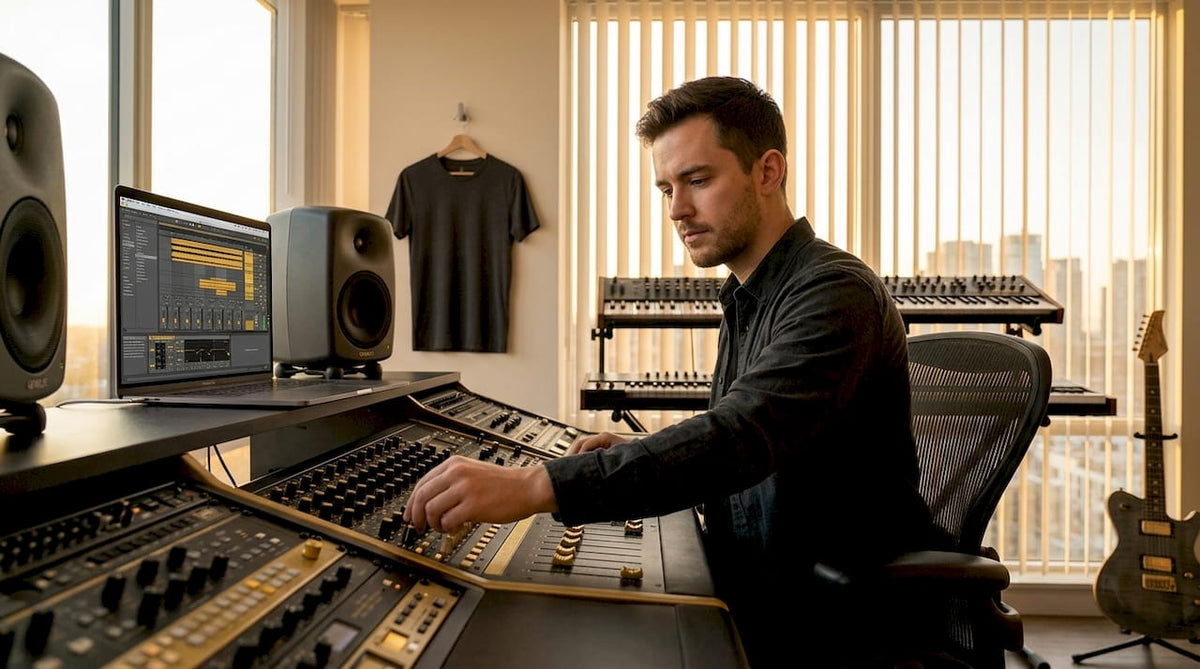
Beats are the rhythmic foundation of modern music, functioning as the structural pulse that organizes sound, directs listener attention, and defines genre identity. Every track you produce or perform rests on this foundation. Without a coherent rhythmic framework, melody loses context, arrangement loses momentum, and listeners lose the physical connection that makes music feel alive. Understanding the role of beats in modern music means understanding why your kick drum placement matters as much as your chord progression, and why neuroscience, groove theory, and DAW technique all point to the same truth: rhythm is not decoration. It is architecture.
How does beat perception work in the brain?
Beat perception is not passive. The brain actively constructs rhythm from incoming sound, using internal timing mechanisms to predict and anticipate the next pulse. This means even when a beat is syncopated or partially obscured, your listener’s brain fills in the gaps. EEG and behavioral research confirms that neural beat periodicity arises even under degraded repetition conditions, though repetition strengthens that internal representation significantly. For producers, this is critical: your listener is always trying to find the beat, and your job is to reward that search.
The motor system plays a direct role in this process. The right dorsal premotor cortex does not just process movement. It actively generates and sustains beat perception from the top down. TMS studies show that disrupting this region selectively impairs beat perception and beat imagery, even when the acoustic signal is unchanged. This means the brain treats rhythm as a motor prediction problem, not just an auditory one. That is why people tap their feet, nod their heads, and feel compelled to move. The motor cortex is already rehearsing the beat before the body acts.
Rhythm learning follows the same perceptual logic. Research on theta oscillations found that learning occurred in visual and visuomotor conditions but not in motor-only conditions, with theta band power increasing specifically when perceptual temporal structure was present. Active listening with auditory cues drives rhythm internalization more effectively than repetitive physical practice alone. This has direct implications for how you train your ear and how you sequence beats for maximum listener engagement.
- Beat perception arises from internal motor prediction, not just acoustic input
- Syncopation does not break beat perception; it challenges and rewards it
- Repetition strengthens neural beat representation without being strictly required
- Theta oscillations increase during perception-supported rhythm learning
- Motor areas like the premotor cortex generate beat imagery independent of movement
Pro Tip: When programming syncopated patterns in Ableton Live or FL Studio, maintain a consistent underlying pulse in your low-end or hi-hat layer. This gives the brain’s motor system an anchor point, making complex rhythms feel groovy rather than chaotic.
What is the role of repetition and microtiming in groove?
Groove is the quality that makes a beat feel irresistible rather than merely correct. It does not come from perfect timing alone. Analysis of 88,357 vocal tracks across decades and genres found that microtiming fluctuations combined with attack shape and timbre form stable, genre-specific groove components that have evolved over time. Straight quantization produces accuracy. Microtiming produces feel.
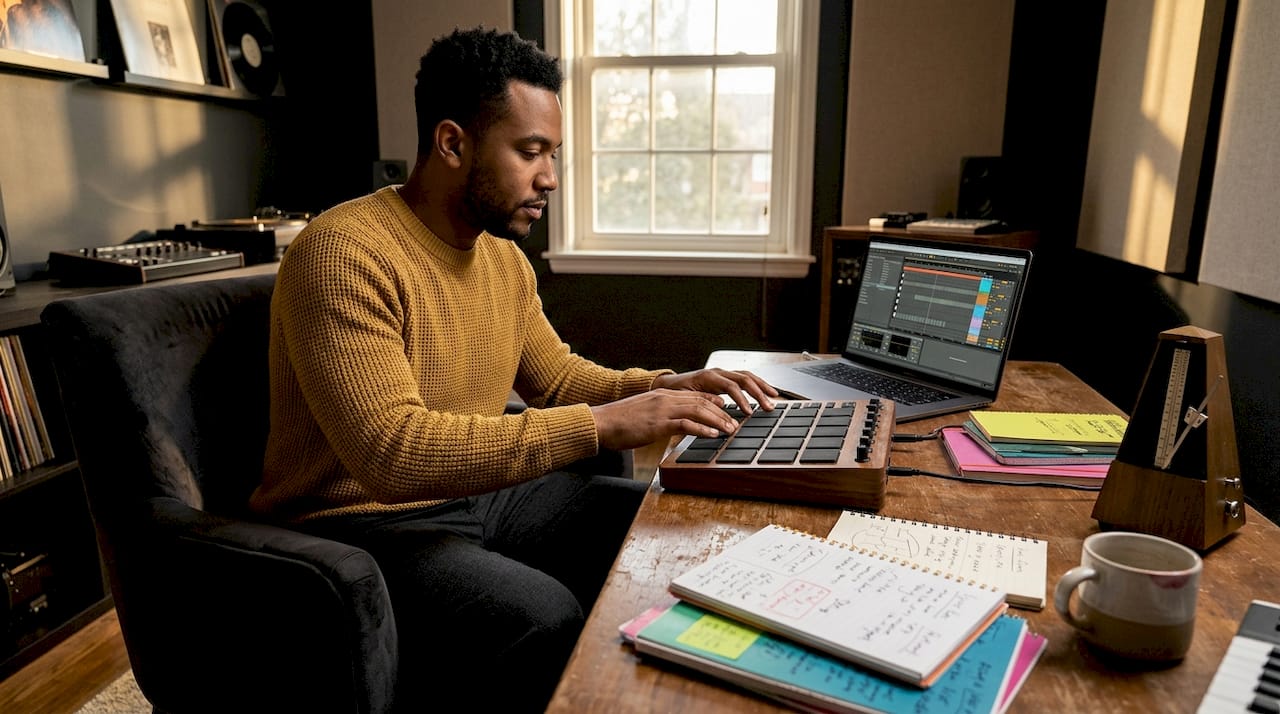
Repetition is the engine behind groove’s predictive power. When a rhythmic pattern repeats, the brain builds a temporal model that anticipates future events. Autocorrelation models show that groove perception can arise from repeating temporal event patterns even when the fundamental acoustic energy at that frequency is absent. The brain hears a pattern that is not literally present in the waveform. This is why a four-bar loop with subtle variation feels more alive than a single bar repeated identically sixteen times.
Microtiming does not act alone. Producer-informed research confirms that quantizing beats alters feel unless attack shape, timbre, and dynamics are preserved alongside timing corrections. A snare hit that lands slightly late but has a sharp transient reads differently than one that is perfectly on the grid with a soft attack. Both timing and texture contribute to whether a beat feels human or mechanical.
| Genre | Timing characteristic | Groove quality |
|---|---|---|
| Hip-hop | Laid-back, behind the grid | Heavy, weighted feel |
| Jazz | Swing ratio, push-pull phrasing | Fluid, conversational |
| EDM | Strict quantization, sidechain compression | Mechanical, driving energy |
| R&B | Subtle microtiming, ghost notes | Warm, expressive pocket |
| Afrobeats | Polyrhythmic layering, slight anticipation | Syncopated, danceable momentum |
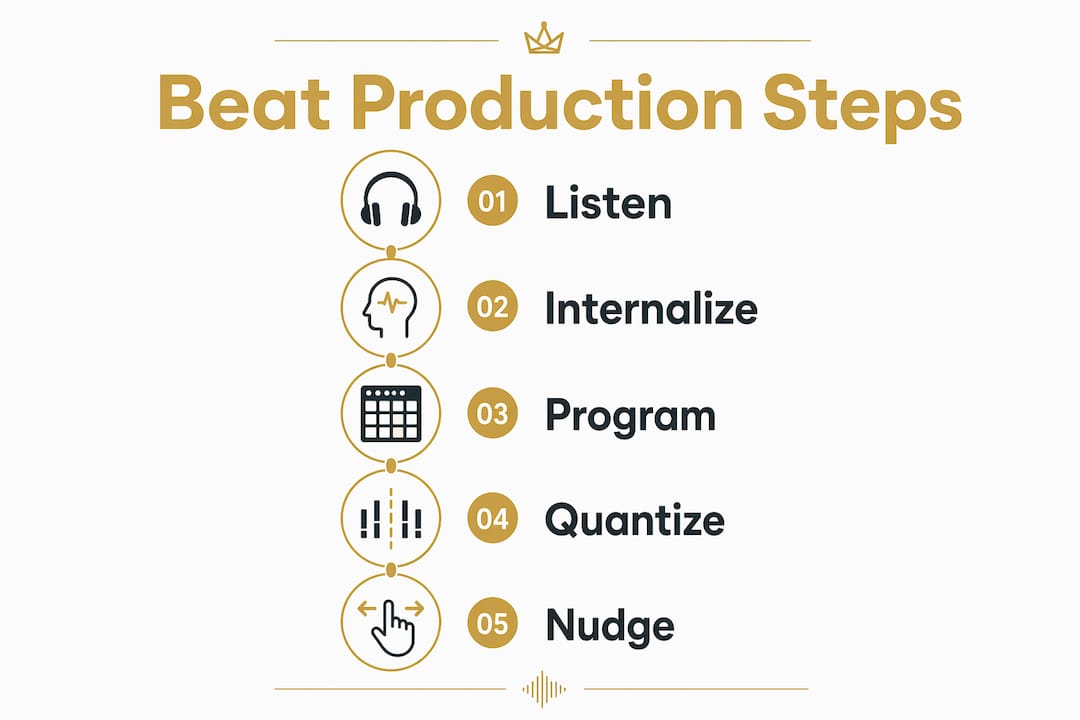
Pro Tip: After quantizing your drum pattern in Logic Pro or Pro Tools, manually nudge the snare 5 to 10 milliseconds behind the grid and soften the hi-hat velocity on beats two and four. The result is a pocket that feels played, not programmed.
How do beats shape genre identity and production style?
The impact of rhythm on songs goes far beyond tempo. Beat structure defines genre as much as instrumentation or harmony does. A four-on-the-floor kick pattern signals EDM before a single synth note plays. A boom-bap snare on beats two and four with swung hi-hats signals classic hip-hop before the rapper opens their mouth. Beats carry genre memory, and listeners recognize that memory within the first two seconds of a track.
Here is how beat characteristics map across four major genres:
- Hip-hop: The kick and snare form the backbone, with the kick often displaced ahead of or behind the grid for a weighted, deliberate feel. Hi-hats carry rhythmic complexity through triplet subdivisions and ghost note patterns. Bass lines lock tightly to the kick, creating a low-end conversation that drives the track forward.
- EDM: Beats prioritize energy and dancefloor function. The four-on-the-floor kick pattern, sidechain-compressed pads, and off-beat open hi-hats create relentless forward momentum. Arrangement decisions hinge on the beat’s ability to build tension and release it at drop points.
- Pop: Beats in pop production balance accessibility with rhythmic interest. Producers like Max Martin and Stargate use clean, punchy drum sounds with minimal syncopation to keep the focus on melody and vocal performance. The beat supports without competing.
- Jazz: Rhythmic complexity is the point. The ride cymbal carries the primary pulse while the snare and kick respond conversationally. Swing ratios shift the feel from straight to deeply syncopated, and the interplay between drums and bass creates a groove that breathes rather than drives.
The role of melody in modern beats is also worth noting here. In genres like trap and lo-fi hip-hop, the melodic elements are often designed around the beat’s rhythmic gaps rather than the other way around. The beat dictates where the melody breathes, where it lands, and how much space it occupies. Rhythm leads; melody follows.
Practical tips for producers working with beats
Effective beat production requires more than technical skill. It requires understanding how the brain processes rhythm and using that knowledge deliberately.
- Prioritize periodic structure over perfect repetition. Maintaining consistent structural recurrence in your DAW matters more for beat perception than looping an identical pattern. Vary your patterns every four or eight bars while keeping the underlying pulse stable.
- Avoid over-quantization. Snapping every element to the grid removes the microtiming variations that create groove. Use quantization as a starting point, then humanize selectively.
- Use velocity variation to shape dynamics. A snare at 127 velocity every single hit reads as robotic. Dropping alternating hits to 90 to 100 creates the illusion of a live drummer without sacrificing precision.
- Study genre-specific timing. Listen analytically to the beat packs and reference tracks in your target genre. Identify where the kick sits relative to the grid, how the hi-hats subdivide, and where ghost notes appear.
- Balance repetition with variation. The brain rewards pattern recognition, but it also needs novelty to stay engaged. Introduce a fill, a displaced kick, or a new hi-hat pattern every eight bars to maintain interest without breaking groove.
Pro Tip: Record a simple drum pattern with a live drummer or use a MIDI controller to tap in your beats in real time before quantizing. The natural timing imperfections give you a humanized baseline that is far easier to refine than a fully quantized grid.
Key takeaways
Beats are the structural and perceptual core of modern music, and understanding their neuroscience, timing mechanics, and genre-specific roles gives producers a measurable creative advantage.
| Point | Details |
|---|---|
| Beat perception is active | The brain constructs rhythm internally via motor prediction, rewarding consistent pulse even in syncopated patterns. |
| Microtiming defines groove | Timing fluctuations combined with attack and timbre create the genre-specific feel that separates professional beats from amateur ones. |
| Repetition builds anticipation | Repeating temporal patterns create temporal anchors that make beats feel inevitable and satisfying to listeners. |
| Genre identity starts with the beat | Hip-hop, EDM, jazz, and pop each carry distinct rhythmic signatures that listeners recognize before any other element. |
| Humanization beats quantization | Velocity variation and subtle timing shifts produce more engaging grooves than strict grid alignment alone. |
Why I think most producers underestimate the beat’s cognitive load
I have spent years working with independent artists who treat the beat as a backdrop. They obsess over their vocal performance, their mix, their sample clearances, and then drop a generic loop underneath and call it done. That approach misses the entire point of what rhythm does to a listener.
The neuroscience is clear: the brain’s motor system is actively engaged the moment a beat starts. The premotor cortex is generating predictions, the body is preparing to move, and the listener is forming a relationship with the groove before the first bar is finished. When that groove is generic or poorly constructed, the listener’s motor system gets nothing to hold onto. The track feels flat, and no amount of vocal production fixes that.
What I find most underrated is the relationship between rhythmic expectancy and emotional response. When a beat sets up a pattern and then slightly violates it, the brain releases a small reward signal. That is the mechanism behind a great drum fill, a displaced kick, or a syncopated hi-hat pattern that catches you off guard. Producers who understand this use it deliberately. Those who do not stumble onto it by accident and cannot replicate it.
My advice: treat beat construction as a cognitive design problem. You are programming a listener’s motor system and reward circuitry, not just filling sonic space. The producers who internalize that shift make better music, faster.
Jay
Build your sound with professional beat packs
Understanding the science and craft behind beats is one thing. Having production-ready material that puts those principles into practice is another.

Beatpacks offers professionally crafted beat packs built by Billboard-charting producer Mini Producer, each designed with genre-specific rhythmic identity, proper microtiming feel, and commercial-grade sound quality. Whether you produce hip-hop, R&B, or pop, you get a foundation that is already working at the level your music deserves. For producers who want extra value, the beat packs with bonuses include additional materials that expand your creative options without adding hours to your workflow. Independent artists use these packs to move from concept to finished record faster, with a professional sound that holds up against major-label releases.
FAQ
What is the role of beats in modern music?
Beats serve as the rhythmic foundation that organizes sound, drives listener movement, and defines genre identity. Every production decision, from arrangement to mixing, is anchored to the beat’s structural pulse.
Why does repetition matter in beat production?
Repetition builds temporal anchors in the listener’s brain, making the beat feel predictable and satisfying. Research shows that repeating rhythmic patterns strengthen neural beat representation and enhance groove perception even when the fundamental acoustic frequency is absent.
How does microtiming affect groove?
Microtiming refers to subtle deviations from a strict timing grid that give a beat its human feel. Analysis of vocal and drum tracks across genres confirms that these fluctuations, combined with attack shape and timbre, are the primary drivers of genre-specific groove.
Does the brain process beats differently than other sounds?
Yes. The premotor cortex actively generates and sustains beat perception through top-down motor prediction, meaning rhythm engages the motor system even when the body is not moving. This is why beats trigger an involuntary urge to move.
How do beats differ across hip-hop, EDM, and jazz?
Hip-hop uses displaced kick and snare patterns for a weighted feel, EDM relies on strict four-on-the-floor patterns for dancefloor energy, and jazz uses swing ratios and conversational interplay between drums and bass for a fluid, breathing groove.