How to Build a Recording Catalog Without Spending Your Whole Budget on Production
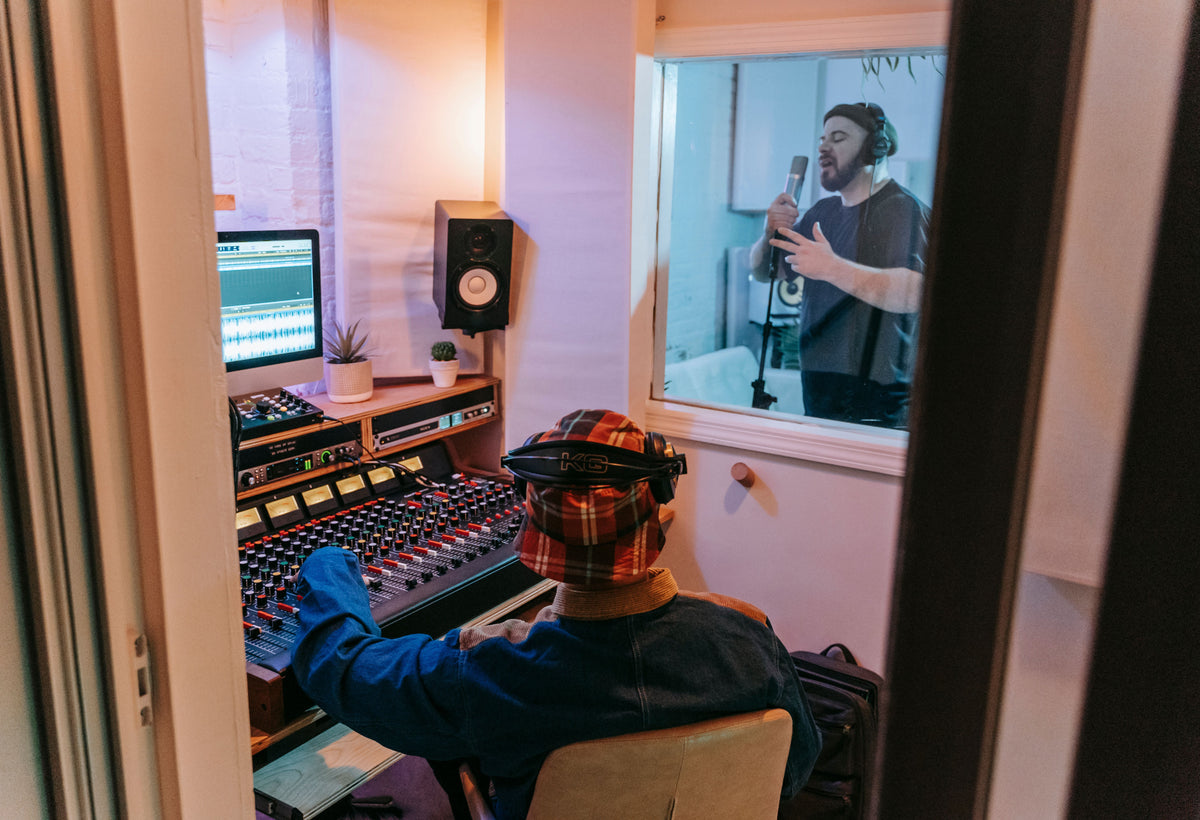
One of the most common mistakes independent artists make with their budget is front-loading it toward production. They spend the majority of what they have on beats, and then they have nothing left for the mixing, mastering, and promotion that determines whether anyone actually hears the music they made.
Building a real recording catalog as an independent artist is a resource allocation problem as much as it is a creative one. This article is about solving that resource problem without compromising the quality of the production you record over.
What a Recording Catalog Actually Is
A recording catalog is not just a collection of songs you have released. It is the total body of recorded material you have to work from, including finished songs, half-finished ideas, scratch recordings with potential, and fully produced tracks that have not been released yet.
Artists who build strong catalogs give themselves optionality. They always have something to pull from when an opportunity comes up. A playlist wants a new track. A brand wants to license something. A collaboration partner wants to hear your range. An artist with a deep catalog can respond to all of those opportunities without rushing something new into existence.
Building that catalog takes consistent recording output over time. And consistent recording output requires that your production costs do not prevent you from recording as often as you want to.
The Budget Math Most Artists Do Not Run
Let us look at what a year of music production costs under two different models.
Under the individual beat lease model, an artist who wants to record 20 songs pays roughly $30 to $75 per beat, which works out to $600 to $1,500 in production costs alone. Add mixing at $100 to $250 per song and mastering at $50 to $100 per song, and the total cost of finishing 20 songs runs between $3,600 and $8,500. For most independent artists, that is an impossible number.
So they scale back. Instead of 20 songs, they record 5. Instead of finishing and releasing consistently, they release once and then take six months to save up for the next round. The catalog does not grow, the momentum does not build, and the career stalls.
Under the beat pack model, production costs collapse. The Blessed Vol. 1 pack from Beat Packs gives you a professional library of beats to work from at a fraction of the individual lease cost. Your production investment for a year of recording might be $20 to $50 total. That frees up your actual budget for the elements that convert production into finished music people can hear, which means mixing, mastering, and distribution.
The Right Production-to-Mixing Budget Ratio
Here is a practical framework for how to think about budget allocation when you are building a catalog on limited resources.
Spend the smallest proportion of your budget on production that you can while still maintaining the quality standard you need. Beat packs are how you accomplish this. Then allocate the majority of your recording budget to mixing, because mixing is where your recorded performance actually becomes a record. A well-mixed song on $10 production will consistently beat a poorly mixed song on $100 production. The listener hears the mix, not the cost of the beat.
Mastering matters but it does not need to be expensive. There are professional mastering services that charge $20 to $50 per track and deliver work that meets streaming platform standards. Distribution through services like DistroKid or TuneCore costs $20 to $35 per year for unlimited releases. The infrastructure for releasing music is genuinely affordable. What most artists cannot afford is paying $50 to $75 per beat times 20 songs per year.
Recording Volume and Why It Matters
Beyond the budget argument, there is a pure creative argument for recording more songs. Artists who record consistently get better faster than artists who record occasionally. Every session teaches you something about your voice, your delivery, your instincts for what works. That feedback loop accelerates development in a way that no amount of study or practice can fully replicate.
Artists who can only afford to record a few songs per year miss most of that feedback loop. They release, they wait, they record again months later. The growth is slow because the reps are infrequent.
Artists who record from a beat pack and have 20 beats available can record every week. They can experiment with sounds that do not end up in the final release. They can record for the sake of developing their craft, not just for the sake of producing content. That volume of practice has compounding returns on the quality of every subsequent record they make.
How to Use Beat Packs to Build Catalog Strategically
Buy a pack. Set a goal to record something, anything, over every beat in the pack within a specific timeframe. Not to finish tracks, but to get your voice on every beat and learn what you have to say when different production is underneath you. Some of those scratch sessions will reveal concepts worth finishing. Some will not. Both outcomes are useful.
From your scratch sessions, identify the beats that connected most naturally. Build finished tracks from those. Release them on a schedule that creates consistent presence without burning out your audience or rushing quality.
The Blessed Vol. 1 pack is a good starting point for this approach because the range across the pack gives you a wide creative surface area to explore. You are not limiting yourself to one sound. You are discovering your range while staying within a quality standard that keeps your music competitive.
The Long View on Catalog Building
Independent artists who have built real careers did not do it with one song or one project. They did it with consistent, high-quality output over time. The catalog grew, the audience grew, the opportunities multiplied.
That timeline requires that you can afford to record consistently. Beat packs are the production model that makes consistent recording financially viable without compromising on the quality your music needs to compete.
Start with the Taste Test pack if you are evaluating the Beat Packs catalog for the first time. Then build from there. The catalog is designed to support artists at every stage of their development and every budget level. The goal is the same at every price point: production quality that serves your career rather than limiting it.
For tips on building your music career as an independent artist, plus announcements on new packs and catalog releases, drop your email below.
Related Reading
- Affordable Beat Packs for Independent Artists: How to Build a Professional Catalog on a Budget
- Beat Pack vs. Single Beat Purchase: The Investment Case for Independent Artists
- What Is a Beat Pack? Everything Rappers Need to Know Before Buying Production
- Recording Studio vs. Home Recording: What Rappers Need to Know Before Choosing