Recording Studio vs. Home Recording: What Rappers Need to Know Before Choosing
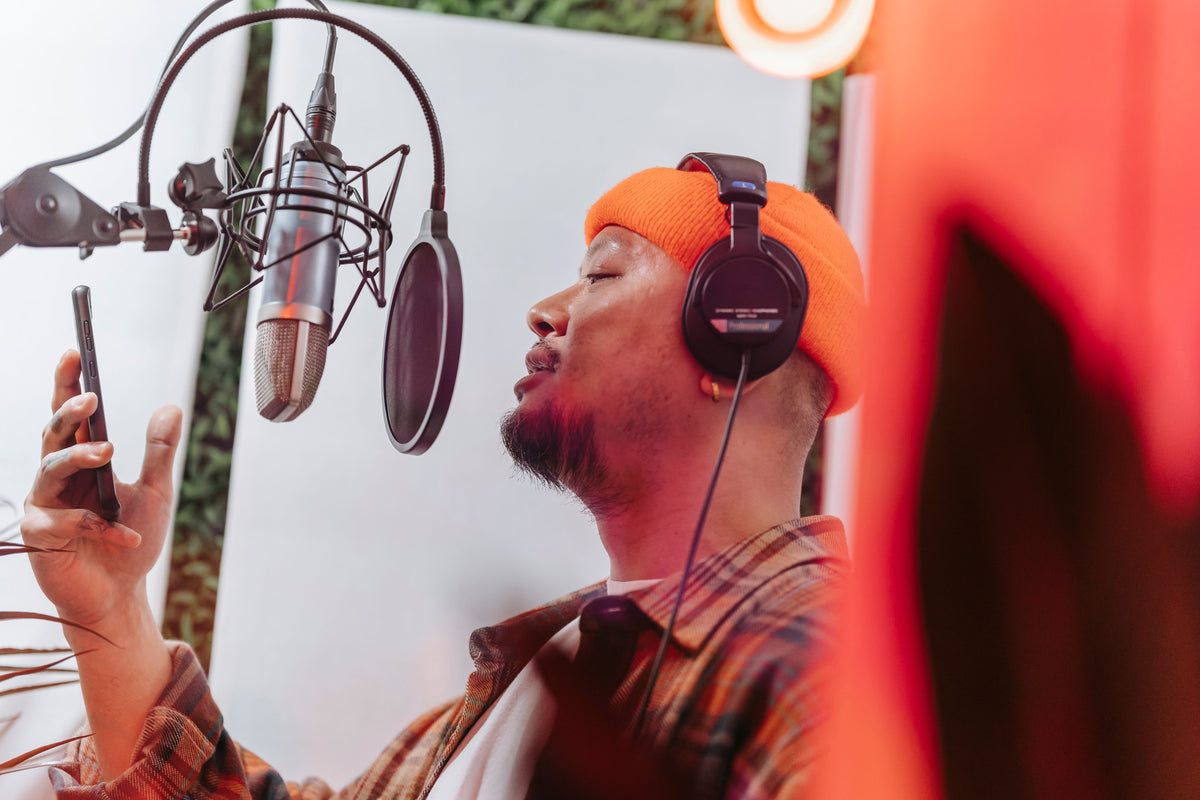
The home recording vs. professional studio debate is one that independent artists spend too much time treating as an either/or decision. The reality is that each option has specific strengths and the most successful independent artists tend to use both strategically rather than committing to one exclusively.
This breaks down where each option genuinely outperforms the other so you can make the decision based on your actual situation rather than the assumption that professional studios are inherently better or that home recording is always sufficient.
What a Professional Studio Gives You That Home Recording Cannot
A properly built recording studio has three things that home setups fundamentally cannot replicate without significant investment: acoustics, monitoring, and engineering expertise in the room.
The acoustic treatment in a professional studio is designed to prevent sound from bouncing off walls in ways that color the recording. When you record in an untreated room, your microphone captures not just your voice but the acoustic signature of the space, reflections and resonances that show up as artifacts in the recording. A skilled mixing engineer can reduce some of this, but they cannot remove it entirely. The cleanest vocal takes happen in acoustically treated environments.
Professional monitoring means the engineers are hearing the recording through speakers that are accurately calibrated to reveal what is actually in the audio rather than coloring it the way consumer headphones or Bluetooth speakers do. Decisions made on accurate monitoring are better decisions.
Having an engineer in the room whose job is to get the best performance out of you while managing the technical side of the session is something most artists underestimate until they have experienced it. A good engineer can coach a performance, catch problems in the take before they make it to mixing, and suggest adjustments that significantly improve the final recording.
What Home Recording Gives You That Studios Cannot
Home recording wins on two dimensions that matter enormously for independent artists: time and cost.
In a home setup, you can record at 2 AM when an idea is fresh. You can record 30 takes of a single line until you are satisfied. You can start a session, stop for an hour, come back, and continue without watching a clock and calculating hourly rates. The absence of time pressure produces different creative output than paying $100 per hour in a professional studio.
Cost-per-session is the other factor. A home studio setup that cost you $400 upfront gives you unlimited recording time at no additional cost. Professional studio time at $75 to $150 per hour adds up quickly across a year of consistent recording.
For scratch sessions, early-stage creative exploration, and developing your ideas before committing to a professional session, home recording is the right tool. You generate more raw material, you experiment more freely, and you arrive at your professional sessions with a clearer sense of what you want to capture.
The Session Ready Argument
One variable that changes the home vs. studio equation significantly is the quality of the production you are recording over. Generic, poorly mixed beats require more work from the engineering and mixing side to produce a professional result. Production that was built to professional standards makes every downstream step easier and more effective.
The Session Ready Vol. 1 pack from Beat Packs was built specifically for this reason. It is production designed to perform in a professional studio context, with mixes that give a recording engineer something clean and well-organized to work with. When you take Session Ready Vol. 1 production into a professional studio session, you are maximizing the value of every hour you pay for because the production is not creating extra work for the engineer.
The same principle applies to home recording. When the production is well-mixed and professionally produced, your mixing engineer receives better raw material to work with after the session, which produces a better final product regardless of whether the recording happened in a bedroom or a studio.
A Practical Approach That Uses Both
The most efficient model for most independent artists at the current stage of the market is this: record scratch sessions and early-stage creative work at home, then take your best concepts into a professional studio for the final takes that will be mixed and released.
This gives you the creative freedom of home recording for the exploratory phase and the technical advantages of a professional setup for the recordings that actually reach your audience. Your studio time is spent efficiently because you arrive knowing exactly what you want to capture. The engineer is working with you on polished concepts rather than helping you figure out the song in real time at studio rates.
Production quality feeds both phases of this approach. Session Ready Vol. 1 and the broader Beat Packs catalog are built to perform in both contexts, which means you are not managing a different production library for home sessions and studio sessions. The same production moves through both phases and holds up at every stage.
The Quality Threshold Question
The honest answer about home recording quality is that the threshold has lowered significantly. A $150 microphone, a $120 interface, and a reasonably quiet room with some basic acoustic treatment (foam panels in strategic positions, recording in a closet full of clothes) can produce vocal takes that are genuinely workable for mixing.
The remaining limitations of home recording are less about the hardware and more about the space and the absence of professional guidance. Those limitations can be mitigated but not fully eliminated without investing at a level most independent artists are not ready for.
Know where your home setup hits its ceiling and invest in professional sessions for the records that matter most. Use the home setup liberally for everything else. The distinction between the two is a strategic tool, not a permanent commitment to one approach.
For production built to perform in both home and professional settings, start with the Session Ready Vol. 1 pack or the Taste Test. Drop your email below for more on recording, production, and the independent artist career path.